

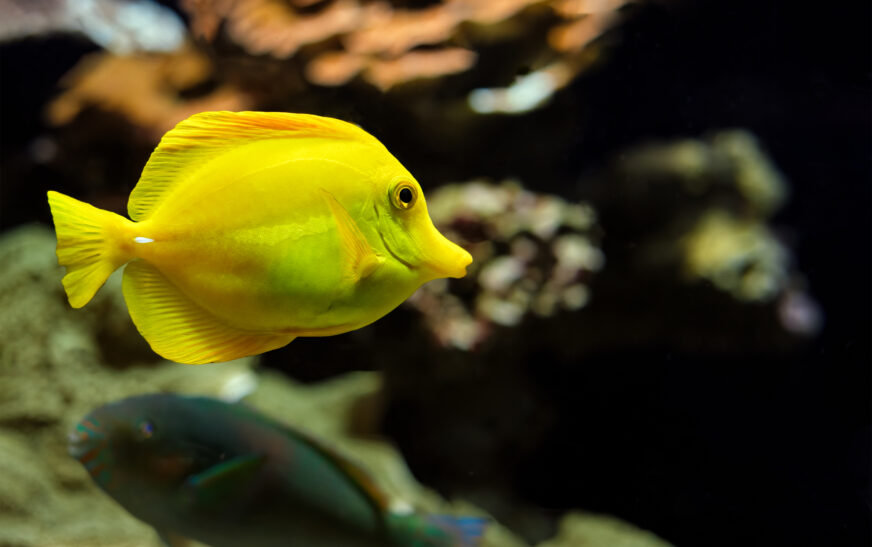
Creating a thriving aquarium requires much more than simply buying a tank and adding water and decorative items. One of the most critical elements that should be considered when assembling a new aquarium is selecting compatible fish for it. With hundreds of species available in pet stores and online shops, it can be challenging to make an appropriate choice for your tank. The article will focus on various aspects that should be analyzed before adding fish to an aquarium to make sure that they will coexist happily.
Fish Compatibility
The compatibility of fish in an aquarium is usually understood as their ability to cohabit successfully. In other words, it means that all species of fish living in the same tank should have compatible requirements for food, water parameters, temperature, etc. Choosing the wrong combination of fish for a new tank may result in stress, disease, and even death of the latter. Thus, the research phase should not be neglected and must include a thorough examination of the requirements for every single species.
It can be noted that there exist three categories of fish that can be used to populate aquariums – aggressive, peaceful, and active swimmers. Each category of fish is characterized by its peculiarities that must be taken into account. Peaceful fish are generally recommended for people who are only getting started with their aquariums. Species such as neon tetra, guppy, and harlequin rasbora are popular among beginners because they are quite affordable and can live in groups in smaller tanks. However, they cannot be combined with bigger and aggressive species.
Active swimmers like angelfish and discus can only thrive in large tanks since they need enough space to move. At the same time, these species require being grouped with two or three similar fish because they can experience stress otherwise. Finally, aggressive fish usually occupy the upper level of the tank and cannot live in harmony with peaceful species. Thus, combining various types of fish in one aquarium may become quite challenging because it implies meeting numerous criteria that should be satisfied.
Researching Fish Compatibility
One of the main phases of adding new fish to an aquarium is the process of researching and analyzing the peculiarities of their habitat and behavior. This phase can be divided into several stages. First, the researcher should obtain information about their eating preferences and swimming level. The former can reveal whether the fish can live in the same tank because there exist carnivorous, herbivorous, and omnivorous species of fish that should be carefully chosen. The latter can determine the water levels where the fish lives.
In addition, it is important to know the exact size of a fish to avoid placing the big one in a small tank or adding small fish to a large tank because it can cause them to feel uncomfortable and insecure. Finally, the fish temperament should be researched to understand whether they can peacefully coexist without fighting. It is clear that a combination of fish with different temperaments can lead to conflicts that can harm their health.
Choosing Fish Based on Tank Size
Another criterion that must be considered when choosing fish is the tank size. In fact, tank size directly determines the number of fish that can be added to an aquarium, as it impacts the water parameters and overall living conditions. Below are listed guidelines for choosing appropriate fish based on the tank size:
Small Tanks (<10 gallons). Fish species such as neon tetras, guppies, and harlequin rasboras can be used in these tanks;
Medium Tanks (10-20 gallons). Cichlids, catfish, and goldfish can be used in this type of tank;
Large Tanks (20-50 gallons). Angelfish, discus, and sharks can be used in large tanks; and
Extra-Large Tanks (>50 gallons). This tank is ideal for large schools of fish.
Creating a Fish Community
Finally, creating a fish community is one of the main objectives of a person who is going to populate his/her aquarium. To achieve success, he/she should follow several rules:
Introducing fish slowly into the tank is a common practice. It allows avoiding the appearance of stress, disease, and death of fish;