
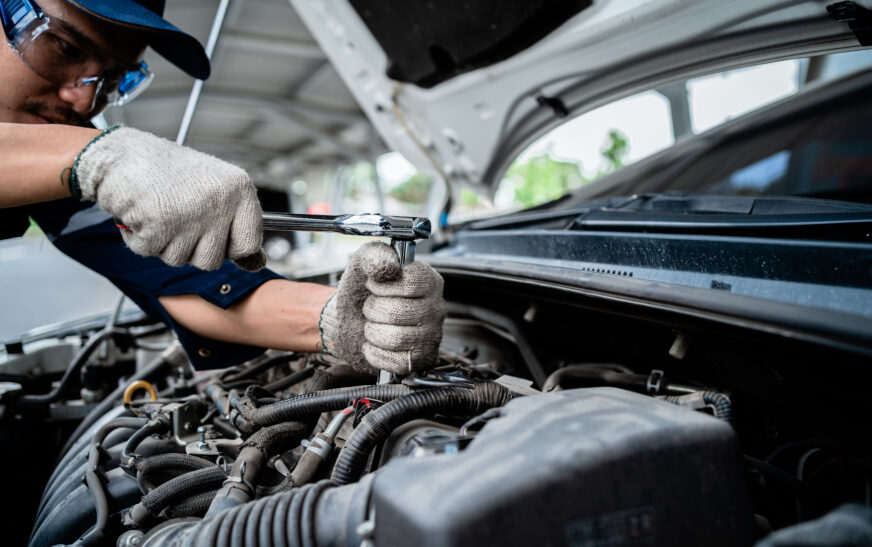
The importance of car maintenance is hard to overestimate since failure to carry out routine servicing operations could result in severe car problems. Besides, ignoring regular maintenance procedures could lead to significant expenses that one is expected to incur in order to restore their car to its normal condition. Therefore, proper care is important to guarantee that the car functions properly. In addition, it ensures its longevity and reduces risks of experiencing troubles with it. This paper is aimed to provide basic information about maintenance of one’s vehicle.
Car owners have to understand that they should be aware of certain information pertaining to proper care and operation of their cars. One of these things includes following a recommended maintenance schedule. All car manufacturers prepare special guides that outline different procedures that must be done with one’s vehicle regularly in order to avoid potential malfunctions. Therefore, reading the car manual is essential to know what needs to be done and when.
Usually, a vehicle has to undergo some changes depending on how much time has elapsed since purchase. For example, an oil change is necessary in case one drives 5,000-7,500 miles. However, there are exceptions and one should refer to the owner’s manual. Other actions to do might include rotating tires, replacing brake pads, checking different fluids, and other actions.
Checking Various Fluids in Car
Fluids play a crucial role because they are directly related to the car functioning. Therefore, regular inspection is vital to make sure that a vehicle works correctly. Checking the level of engine oil, transmission fluid, power steering fluid, coolant, and brake fluid is necessary. In particular, the former two help to ensure that the engine operates efficiently. Engine oil is responsible for cooling and lubricating engine parts whereas transmission fluid transmits power.
Maintenance of Battery and Car Electrical Systems
Proper maintenance of electrical systems and batteries is also important in car functioning. They are needed to start a car as well as to perform different tasks. Without an adequate battery and electrical system, one cannot expect that a vehicle will start. It is possible that a dead battery may lead to being stranded on the side of the road which could be dangerous.
Moreover, a car might start but not work properly because of problems with the electrical system or battery. It is important to check battery terminals and cables in order to prevent such situations. If they are corroded or damaged, cleaning is vital.
Tire Inspection and Maintenance
Since tires are the main component of contact between a car and the road, it goes without saying that they need to be carefully maintained. Failure to do so would mean that one would face various problems associated with fuel efficiency, handling, and safety. Thus, regular inspection of tire pressure is necessary in order to prevent issues. In particular, underinflated tires might reduce fuel economy, affect evenness of tire wear and stopping distance.
Moreover, it is advisable to inspect treads twice a year. If treads are too thin, then driving becomes hazardous for drivers. Such tires may increase chances of accidents because of reduced traction and braking distance.
Braking System Maintenance
It is important to keep in mind that a car is equipped with a braking system. The latter is also critical since it prevents accidents. Worn-out brake pads and drums reduce effectiveness of brakes and increase stopping distance. Thus, it leads to accidents that could be avoided.
Inspecting brake pads and drums regularly is very helpful. For example, brake pads must be inspected every 10,000-15,000 miles. Otherwise, they will wear out and make noises and cause vibrations. Drum inspection is required every 12,000-15,000 miles.
Air Filter Checkup and Replacements
In addition, one has to monitor car air filters. Air filters are necessary for the provision of good air quality and efficient combustion in the engine. Clogged air filter increases amount of gasoline consumption and lowers performance.
Thus, checking air filters is important in order to prevent such problems. They have to be inspected every 15,000 to 30,000 miles. Moreover, their replacement is necessary to avoid issues.
Spark Plug Inspections
As a general rule, spark plugs should be inspected every 30,000-100,000 miles. These plugs are crucial for providing effective car performance. Their replacement is necessary in order to prevent poor engine function.
If plugs are worn out, then car might misfire. Thus, fuel efficiency, performance, and emission rate will become higher which is undesirable for drivers.
Regular Inspections
As stated above, inspections of all components of the car are crucial because they could help to detect problems at early stages of development. It means that if one inspects a car on a regular basis, he/she might discover malfunction at early stages and take necessary measures to solve it. As a result, the problem will not aggravate and the owner will have to spend less money on repair services.