

Growing succulents at home is an entertaining activity that enables you to create natural surroundings in your house. It allows introducing a wide range of plants to add some greenery to your apartment and make it look attractive. Succulents are beautiful plants, whose diversity in terms of shape, size, and colors is really amazing. You can find a huge variety of succulents, which you can plant either indoor or outdoor. From exotic desert aloe vera to fancy echeveria, you will definitely find a plant for yourself.
Choosing a Succulent
First of all, there are a lot of succulents you can plant at home. However, to pick the right one, you will need to pay attention to several things. One of the main factors is lighting. Some plants prefer sunny places, whereas others love partial shades. For instance, aloe vera, cacti, and echeveria prefer sunlight, whereas peperomia, kalanchoe, and crassula can grow even in partial darkness. Therefore, before picking a plant, you should think about how much light you have in your room.
Another important thing to consider is temperature and humidity in your room. For example, echeveria and peperomia usually grow in a warm place with constant temperatures from 65 to 75°F (18 to 24°C). At the same time, aloe vera and agave require lower temperatures, which should not be higher than 55 to 65°F (13 to 18°C).
The last factor to remember is soil. Most succulents require a well-drained substrate to grow properly. Therefore, you should use a potting soil combined with perlite or sand. Such a mixture will help to control water levels, which will prevent the risk of excessive watering.
Watering
It is considered to be one of the key factors since all plants need moisture to survive. However, due to the peculiar features of succulents, you should avoid excess watering. Since they are known for their capability to store moisture in the stems, leaves, and roots, they do not require frequent watering. But many people often neglect this aspect, which leads to over-watering and plant death.
Therefore, you need to check the soil moisture on a regular basis. As soon as it is completely dry, it should be watered thoroughly. However, if you notice that the substrate is slightly wet, then you need to wait for a couple of days and check the situation. While watering the plant, try not to touch its leaves to prevent root rot.
Soil and Fertilization
As was mentioned above, well-drained soil is essential for your succulents. Potting soil with perlite or sand is the best choice in this case. Besides, you need to fertilize your plants to enhance their development. It is necessary to remember that these plants require very little fertilizing since succulents do not need a lot of nutrients to grow.
While choosing fertilizers, opt for a specialized liquid formula. Be sure that you dilute fertilizer in half concentrations to prevent burns. Apply it once a month in spring and summer; otherwise, your plant will enter the dormant state, which means that you need to fertilize it once in two months only.
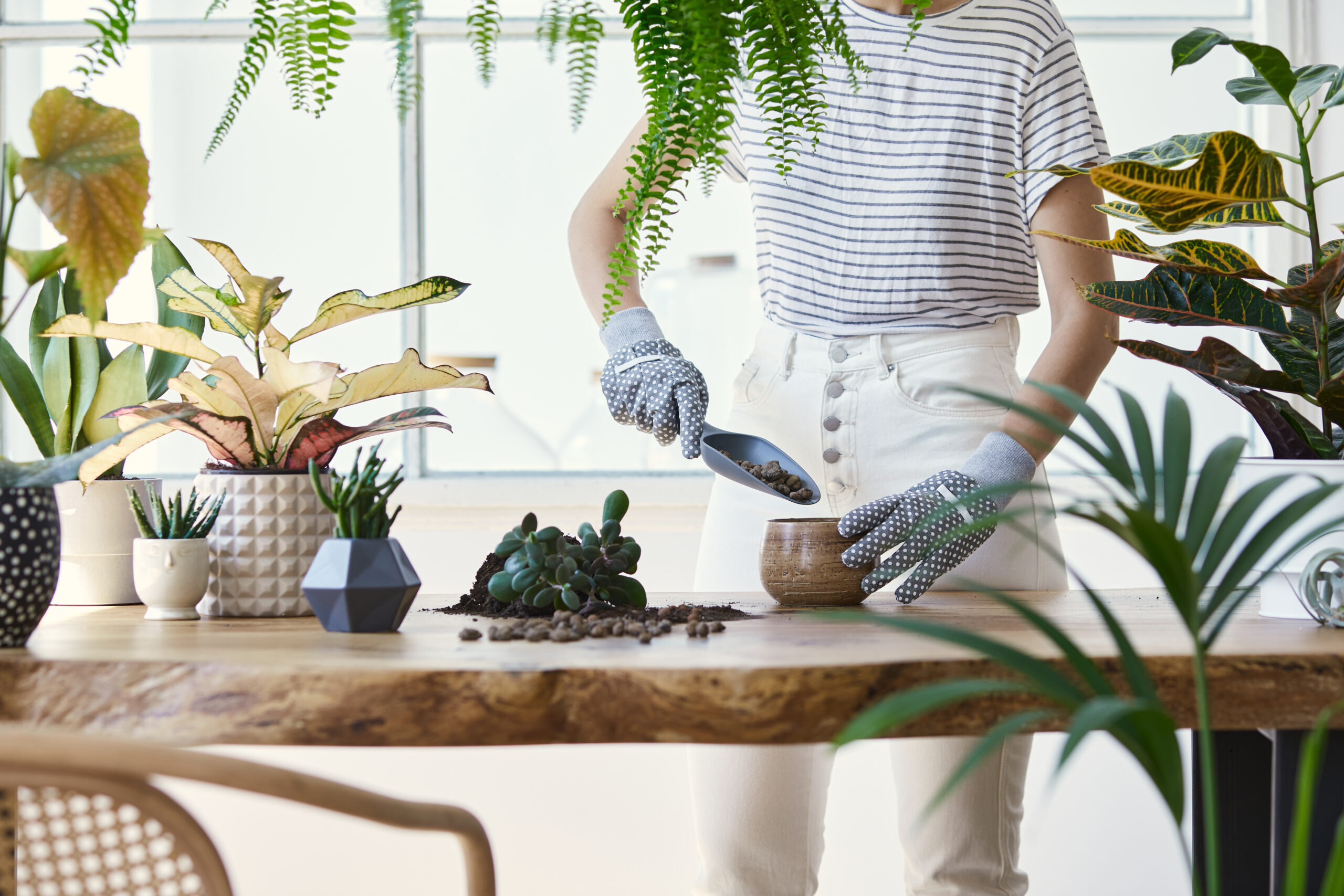
Propagating and Repotting
To increase the number of your plants and improve the results, you should think about propagating and repotting. Propagation involves creating a new plant based on the existing one. As for repotting, it refers to transplanting to another pot with fresh soil. Both activities are effective and will definitely contribute to your success.
To propagate your succulents, you should cut either leaves or stems from the old plant. Let them dry for two days until calluses appear. Then, plant the cutting in the soil and water regularly. In a few days, you will notice that small shoots begin to appear.
As for repotting, you need to purchase a bigger pot and fill it with soil. Remove your plant from the old pot carefully without damaging its roots. Also, cut off all dead parts of the plant, and plant it in the new pot. Water it regularly to support healthy growth.
Common Problems and Their Solutions
Although you follow all the tips, you may face various issues, including pests, diseases, and nutrient deficiency. That is why you need to control your succulents regularly to detect and solve problems timely. If you see that there are insects on your plant, you should buy a suitable pesticide. Disease-related symptoms can be found out by visiting a specialist and consulting with them. Finally, you should think about fertilizer application if your plants show yellowing leaves or stop growing.
Conclusion and Call to Action
In conclusion, it is worth emphasizing that succulents are easy-to-grow indoor plants that will help you decorate your house. All you need to do is choose a proper plant and adhere to the above tips. We hope that you will manage to create wonderful surroundings in your room.