
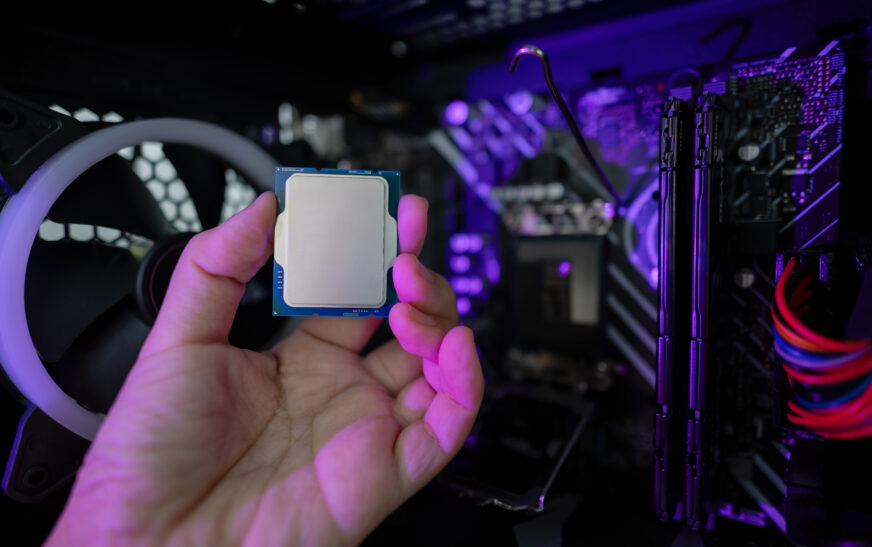
Upgrading a computer is one of the most challenging activities due to a number of factors. The problem is particularly difficult from the point of view of a budget allocation. When making an upgrade, we are always tempted to invest in the most expensive and innovative parts available. It should be understood that there is no need to spend extra money to obtain top-notch computers. In the article presented below, we are going to discuss the strategies allowing users to upgrade their PCs successfully.
The process of upgrading a computer can become a good solution for many users who want to obtain additional capabilities of their PCs. The idea consists in introducing new components which allow improving certain characteristics or functions. In most cases, upgrading a computer allows users to enhance the performance and capabilities of computers. At the same time, it may happen that some users fail to make successful upgrades because of spending excessive amounts of money or making inappropriate choices.
As we have already mentioned, it is necessary to assess a user’s needs prior to making an upgrade. Only this approach will allow avoiding numerous problems related to improper selection of computer parts and unnecessary expenditures.
When assessing needs of a particular user, the following questions should be answered.
* What are the current specifications of your PC?
* Which software is used and what are the system requirements?
* Which amount of memory and free space are needed?
* Are there any particular demands for graphics or processing power?
Understanding one’s needs will help users make an appropriate selection.
After having assessed the needs of a user, it is required to choose the right components which should be installed in a computer to improve its performance. When choosing components, a user should pay attention to the following factors.
* What is my budget for the upgrade?
* What are the important features of each component?
* Are there any compatibility concerns?
* Are there any cheaper components available?
As was mentioned above, the main problem of most people is associated with finding adequate components at relatively low prices. Therefore, a set of tips will be provided below.
* Refurbished/used components. One of the most effective methods consists in looking for refurbished or used parts. Such parts can be found online and in stores and are characterized by lower prices compared to brand-new components.
* Previous generation components. It should be noted that new parts appear every year; hence, users can purchase previous generation components which can be considered cheap enough.
* Comparison of prices. One should compare prices of similar components offered by different companies in order to choose the cheapest one.
* Discounts. It is always recommended to look for discounts provided by manufacturers in order to decrease overall expenses.
In most cases, making an upgrade will not affect warranty terms since users are free to install certain components themselves. However, it is recommended to look through warranty documentation in order to avoid unexpected situations. Here are some recommendations concerning upgrading.
* Study the warranty agreement. Users should study agreements and terms of warranties before making an upgrade.
* Authorized upgrade path. Many manufacturers have authorized upgrade paths which will not influence warranties.
* Instruction. If in doubt, one should follow the manufacturer’s instruction in order to make sure there are no negative consequences.
When thinking whether to perform upgrades independently or entrust the work to professionals, users should keep in mind that there are two possible approaches.
* DIY. Independent work performed by users is characterized by rather moderate expenses although users should possess sufficient knowledge and skills. Moreover, this activity is time-consuming and may involve risks such as voiding of warranties.
* Professional. This alternative consists in addressing specialists who will carry out an upgrade and provide guarantees of high-quality installation. Nevertheless, it should be mentioned that costs will be higher.
There are certain mistakes made by users which can negatively affect the process of upgrading. It is necessary to avoid the following errors.
* Installation of incompatible components. As a result, some users experience serious problems connected with installation of the wrong parts.
* Overheating. Improper installation may lead to overheating and failure of the entire computer.
* Update of software. Some users forget about updating software in advance.
* Testing after completion. As a result, some users ignore testing after making an upgrade and do not understand whether there were any problems.
In conclusion, it should be mentioned that upgrading a computer without spending excessive sums is a rather complicated process requiring careful consideration. Based on the information provided above, it becomes apparent that there are numerous aspects one should pay attention to.