
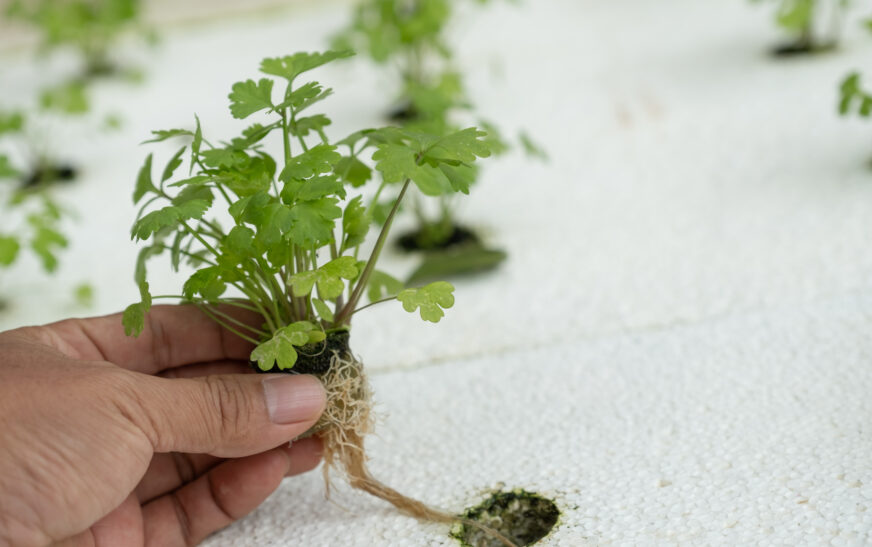
For people who have had trouble with growing plants in soils because of soil-borne infections, nutrient deficiency, or drainage problems, growing plants without soil could appear to be the ultimate dream come true. Nevertheless, this practice is known as hydroponics, and it has been used by many gardeners throughout the world for decades. As an expert in this field, I will discuss some of the main facts about hydroponics that may help you to understand this innovative practice better and apply it successfully.
Understanding Hydroponics
Hydroponics is an innovative method that presupposes growing plants in the absence of soil using only a nutrient-rich solution. In contrast to ordinary agriculture, where plants are exposed to many harmful factors that can affect their health, this technology enables one to create a protected and controlled environment for growing plants. It can be particularly advantageous for indoor cultivation of various kinds of crops. Moreover, this approach can be used even where there is no soil available for growing plants.
The main advantage of hydroponics is that plants are supplied with the required nutrients continuously, which helps them develop healthy roots and increase the rate of their growth significantly. Moreover, this method can help increase yields since plants receive all the resources they need to flourish within their life cycle. Besides, this method does not require the use of much water. This feature is crucial in arid areas where water is scarce.
Choosing the Right Hydroponic System
Several types of hydroponic systems can be distinguished, which differ from each other in their design and functionality. Some of them include the following:
* Nutrient film technique (NFT);
* Ebb and flow;
* Drip irrigation.
Each of these systems has its pros and cons and may be more appropriate for specific applications. The first option presupposes placing the plants into the long tubes filled with the nutrient solution. This method is convenient for growing leafy greens, herbs, strawberries, and so forth. The ebb and flow system implies periodic flooding of the growing medium with the nutrient solution, followed by draining it. This technique is suitable for growing tomatoes, cucumbers, and peppers. Finally, drip irrigation presupposes supplying plants with the nutrient solution by dripping it slowly onto their roots through a system of tubes. This technique is preferable for growing orchids and African violets. In case you decide to cultivate plants indoors, it is possible to purchase kits that contain everything necessary for growing crops without soil. Otherwise, you will have to conduct thorough research on each of the available systems before making a decision.
Building Your Hydroponic System
After selecting a particular hydroponic system, you should begin building it. For example, NFT requires the use of grow lights, growing medium, reservoirs, and pumps. The growing medium refers to the material used for supporting roots; thus, rockwool, coco coir, perlite, and others may be applied in the process. The next step presupposes filling the reservoirs with a nutrient solution. It can be purchased in a ready form; however, it is also possible to prepare it yourself using fertilizers and some other additives. Finally, it is necessary to place plants in the tubes and provide them with the required nutrients using the system of pumps.
It is important to note that you will need to follow some safety precautions while building your hydroponic system. For example, you should wear safety goggles, protective clothing, and gloves when working with the system. Moreover, it is advisable to ensure adequate ventilation.
Maintaining Your Hydroponic System
Once the hydroponic system starts operating, you will need to monitor its performance regularly and take some actions in case you discover some flaws. For instance, it is essential to check the pH value of the nutrient solution since it should be in the optimal range. Moreover, it is necessary to ensure the availability of sufficient amounts of the required nutrients. If you find that some pests or diseases attack plants, you should eliminate these organisms immediately. Furthermore, it is necessary to clean the system on a regular basis to prevent the accumulation of microorganisms within it.
Tips for Beginners
If you are inexperienced in growing plants in hydroponic systems, you should know how to avoid typical mistakes that many beginners make. First, you should begin your activities with small projects and then gradually proceed to more complicated ones. Second, you need to conduct extensive research on various types of crops that are well adapted for growing under such conditions. Third, you may try to join hydroponic communities to communicate with experienced growers. Finally, you should be patient and persistent, and do not become disheartened if you cannot obtain desirable results at once.
Conclusion
In conclusion, hydroponics is a unique way of growing plants without soil that provides many advantages, such as increased efficiency and reduced waste. When using this technology, it is important to choose an appropriate hydroponic system and learn how to build and maintain it effectively.