
Introduction Creating a circuit may seem difficult to a novice, but actually constructing one is quite simple. All one requires is a power source, conductors, and loads. This process is quite easy, although you can create a variety of complicated circuit structures with those three elements. In this paper, we will show you how to create a basic electric circuit and discuss ways to add more complexity to it.
Basics Understanding the Basic Elements of Electric Circuits To begin with, you should understand the basics of electric circuits. An electric circuit includes a power source, conductors, and loads. A power source is an element that generates electricity. You can use different types of power sources, such as batteries or wall sockets. They create electric energy that travels through a conductor until reaching its destination.
Conductors are also important in any electric circuit. Usually, they are made of metal and allow electrical currents to flow through them. Conductors transport electricity from the power source to the load. Finally, the load consumes electricity from the conductor and operates with it. In other words, loads are electric appliances requiring electric energy to work.
Selecting the Right Components Choosing the Components The construction of an electric circuit requires special care in selecting components. The point is that you should choose an appropriate power source, whose current level will not damage any circuit component. Furthermore, you should consider the voltage of each component, making sure that it does not exceed the specified rating.
You should also focus on choosing the proper conductor. It can be a wire or cable transporting electricity from the power source to the load easily. Finally, you should consider the voltage rating of the conductors as well as that of loads.
Precautions Safety Measures You should take care of several aspects related to safety before creating an electric circuit. Firstly, you should wear proper clothes. Namely, you should put on long sleeves, protecting your hands from any danger. Besides, you should wear goggles, protecting your eyes from potential injuries.
You should operate in a ventilated room, as some pieces of electric equipment might produce toxic fumes during their operation. Moreover, you should check whether the required components are present. For example, you should inspect their voltage and current levels, making sure they correspond to the recommendations.
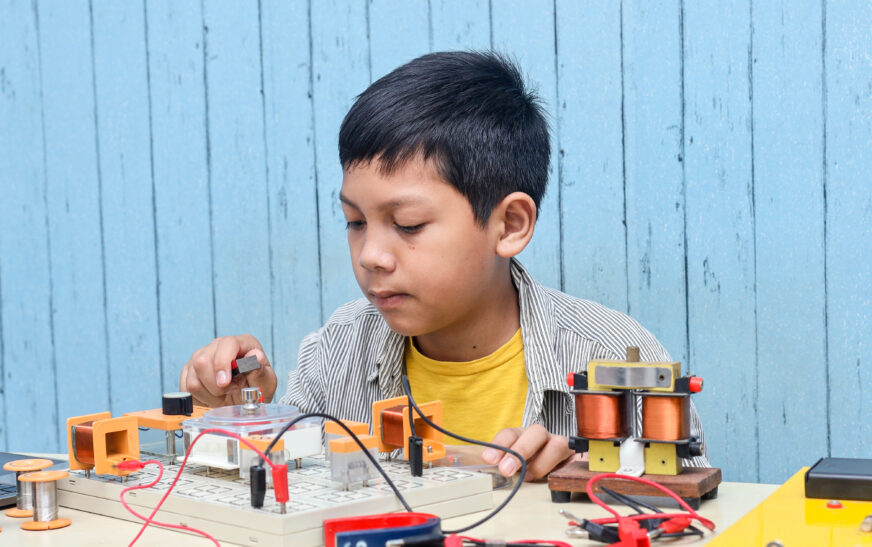
Construction of the Circuit Building the Circuit Now it is high time to start creating your electric circuit. Firstly, you should put all components on a table. After that, you can start building your circuit. You should begin with fixing the power source. Next, you should fasten the conductors to the power source. Lastly, you should fasten the loads to the conductors.
There are different methods of attaching components. However, you should concentrate on the soldering process. Namely, you should melt the solder wire and fix the connections using enough pressure. However, you should be careful not to break your connections by pressing too strongly.
Testing the Circuit Testing the Circuit Once your electric circuit is built, you should test it. You should inspect whether it operates correctly. Therefore, you should turn on the power source and observe whether loads start working. If yes, your circuit is operational. Otherwise, you should find out why the loads fail to activate.
Troubleshooting Troubleshooting There are several things you can do to find out why your loads fail to operate. Firstly, you should review all operations performed during circuit construction. Second, you should check the voltage and current levels of the circuit components. Excessive levels of electricity produced by power sources may cause circuit damage.
Finally, you should attempt to fix your loads. For instance, if the light bulb does not work, you should try changing it. Moreover, if the computer stops working, you should try repairing it.
Adding More Complexity Adding More Elements to Your Circuit Once you understand how to create basic circuits, you can try introducing extra components. Thus, you can include additional elements, such as resistors or capacitors. Moreover, you should think about using advanced loads, such as digital loads or microcontrollers.
Conclusion Overall, the process of creating an electric circuit is quite interesting and easy. You can build a simple circuit and operate it easily. However, you should focus on security issues. If you decide to develop an advanced circuit, you should study extra components in more detail.