

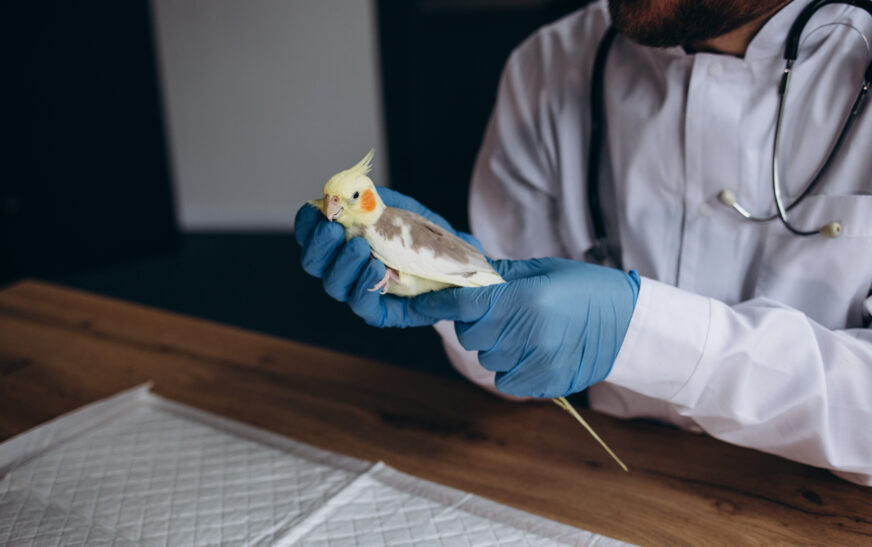
It is a delight to watch beautiful birds flying around and hearing them sing. Furthermore, birds can become wonderful companions in your home. However, it is crucial for you to understand signs of illness in order to offer appropriate care. In healthy conditions, birds seem vigorous and full of energy with their bright eyes, shiny feathers, and hearty appetite; thus, ill birds lose these qualities, revealing that something is wrong with them. Therefore, it is important for you to understand the differences between healthy and sick birds in order to take care of your feathered friend properly.
Understanding of Behavior
One way to know whether a bird is healthy or not is by examining its behavior because animals always reveal some information about themselves using their behaviors. First of all, an active bird will be interested in exercising because such exercises will keep the animal in excellent shape. Conversely, sick birds lose their appetite for exercise.
For example, a healthy parakeet spends most of its time flying, playing around, and being active. In contrast, a sick parakeet sits lazily on the perch, being uninterested in playing or exploring the environment. Moreover, sick cockatiels are lazy as well because they lose interest in foraging and finding food.
Physical Appearance
Healthy birds look vigorous due to the shiny feathers, well-kept posture, and clear eyes. Conversely, it is quite simple to detect signs of illness by looking at a bird’s appearance.
Specifically, you should look at the following aspects:
* Discouraged physical appearance: You should check whether your bird has discolored or matted feathers. Healthy birds have well-maintained plumage with no spots or other defects.
* Eyes and beak: Healthy birds usually have clear eyes and well-developed beaks. It is quite obvious that a sick bird loses its ability to look bright, developing eye problems, including sunken or swollen eyes and deformities of the beak.
* Posture and movement: Healthy birds maintain an upright position while moving, while sick birds move awkwardly and do not stand in a comfortable position.
For example, a healthy canary has bright colors, whereas a sick one is pale and has a deformity of the beak. Besides, a healthy finch has a sleek and shiny plumage, whereas the sick one does not.
Listening to Vocalization
Apart from the visual signs, you should listen to a bird carefully in order to understand whether it is healthy or sick. Healthy birds emit different types of vocalizations, such as singing and chirping, while sick ones have difficulties vocalizing due to various reasons.
For instance, sick birds produce unusual sounds like coughing, wheezing, or wheezing because they have problems with respiration. Moreover, ill birds stop producing various sounds because they are tired of making noise, and they need to rest.
Appetite and Hydration
In order to understand whether a bird is healthy, you should monitor its eating habits and water consumption because a healthy bird eats normally and drinks enough water. Healthy birds eat their food without being distracted by other activities. In addition, they drink enough water regularly.
In contrast, when a bird is ill, it has no appetite for its food and shows some changes in hydration:
* Decrease in eating: When a bird becomes sick, it stops eating its usual food. In some cases, sick birds do not eat anything for days.
* Changes in drinking: When a bird becomes ill, it shows some changes in the frequency of drinking water.
For example, a healthy cockatoo eats its favorite food happily, and it does not feel full until it finishes its portions of food. On the other hand, sick cockatoos lose appetite and start eating less.
Likewise, a healthy macaw has a balanced diet because it eats everything available in its cage and drinks enough water. In contrast, a sick macaw refuses to eat certain foods and drinks less.
Signs of Illness
It is quite difficult to ignore some signs of illness in birds since sick birds show many problems. For example, some ill birds experience digestive problems because they suffer from diarrhea or vomit because of some diseases. Besides, they experience problems with their breathing organs, such as coughing or wheezing. Finally, sick birds start plucking their feathers and grooming their body.
For instance, a healthy canary sings a lot and looks vigorous; its feathers are shiny and neatly arranged. In turn, a sick canary has problems with its feathers because it suffers from some diseases, and it starts plucking them.
Seeking Medical Assistance
As soon as you notice some signs of illness in a bird, you should contact a professional vet. This step is important because timely help allows preventing complications and healing faster.