
It may seem that maintaining a car battery is something complicated and hard to understand for a person who does not possess any knowledge about the car structure. However, this process is quite simple, especially if you know everything about it. In this article, I would like to provide my experience concerning maintenance of a car battery and show how you can use it to prolong your battery’s life and prevent unexpected malfunctions.
How to Choose the Best Car Battery
There are many kinds of batteries designed for different purposes, but their main difference lies in the way they work, some additional features, and their efficiency. Therefore, the selection of the battery will play an essential role in its durability, so you should consider the following factors before making a decision:
Type of Battery
Modern batteries come in three main types, namely lead-acid, calcium-alloy, and maintenance-free. As you may guess, each type has its own features and benefits. Lead-acid batteries, for example, are the most common option suitable for all kinds of cars. Calcium-alloy batteries are considered the most reliable ones due to their strong resistance to vibrations and corrosion.
Reserve Capacity
When buying a new battery, pay attention to its Reserve Capacity (RC) rating as it is responsible for the number of hours the car can operate with the engine running but the generator not recharging the battery. The greater the Reserve Capacity is, the better.
Cold Cranking Amps (CCA)
The CCA indicator measures the battery’s ability to supply power at low temperatures, so it is quite crucial to know its level. The greater the CCA is, the easier you will manage to start the engine even in the most freezing winter days.
Proper Battery Maintenance
Now, having bought a car battery, it is time to take proper care of it to extend its service life. Namely, you should take the following measures:
Check the Terminal
Terminals may corrode with time, thus reducing the battery performance. Be sure to clean them if they show any signs of corrosion.
Secure the Battery
It is essential to make sure that your battery is securely fixed in the compartment, because vibration may cause the battery failure.
Do Not Deep Discharge
Be sure to turn off the headlights or other appliances when the engine stops working. In this case, the battery will not suffer from deep discharge.
Keep the Right Amount of Water
In case your battery uses water, you need to monitor its amount and refill it if necessary. Remember not to pour too much, as the level of the water should be 1/4 – 1/2 inches below the surface.
Life Cycle of the Battery
To understand the life cycle of your battery is a key moment in its proper usage. Usually, you can expect your battery to operate efficiently for about 3 – 5 years, depending on its quality and treatment. Thus, frequent deep discharge and operating the battery at high temperature will affect its service life badly. Moreover, driving in cold areas will prolong your battery’s operation for up to 20%, while living in a hot area will make it function 50% less.
How to Start a Vehicle with a Dead Battery and Replace It
As you could see, proper maintenance and understanding of the life cycle of your battery will make it last long. However, despite all your efforts, the battery will inevitably go down with time. It is crucial to know how to act in such cases. Jump-starting is the best way to deal with the problem. Here are the instructions on how to do this procedure:
Park Both Cars on a Level Spot
Do not forget to apply the parking brake of both vehicles.
Set the Transmission into Neutral
Be sure to engage the parking brake.
Attach Red Wire
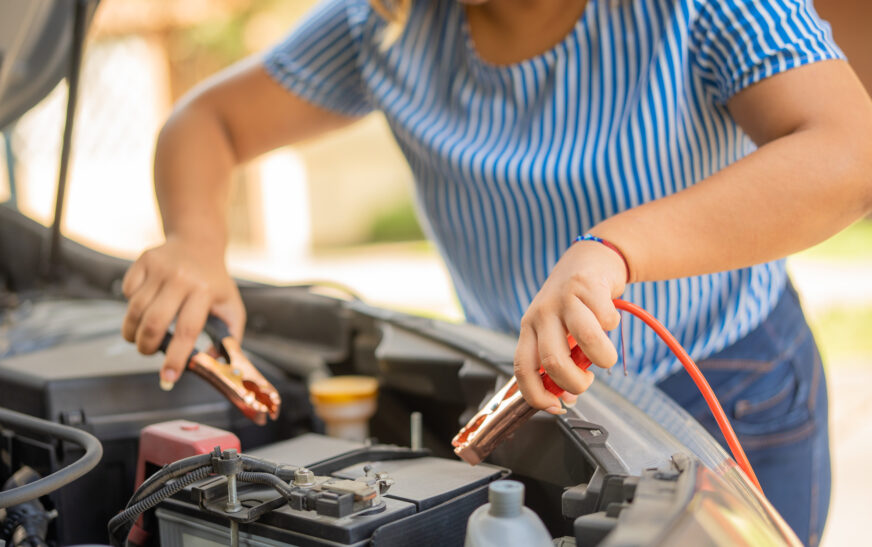
You will need some jumper cables to start your engine. Attach the red cable to the positive terminal of the dead battery and then to the positive terminal of the good one.
Attach the Black Wire
First, attach the black wire to the negative terminal of the good battery. Next, fasten the other side to any metal part of the other car’s engine.
Replacement of your battery will be an important task in some cases. Recycle your old battery when replacing it.
Battery Advanced Care
However, if you are willing to put extra effort into battery care, you may consider using some advanced techniques. Here they are:
Equalization Charging
In order to maintain the life of the battery with equalization charging, you should charge the battery until it reaches 14.4 volts.
Desulfation
To prolong battery’s lifetime, you can buy a special device called desulfator to remove the sulfate from the battery.
Testing
With the help of the battery tester, you will be able to measure the voltage and the internal resistance of your battery.
Battery-related Accessory Devices
There are several accessory devices designed specifically to maintain your battery properly. You can consider purchasing some of them:
Battery Protector
These devices will help to avoid battery discharge or overcharge.
Battery Warmer
Battery warmer is a great accessory to use when the temperature is extremely low.
Battery Maintenance Kit
Such a kit usually contains various tools to maintain your battery.
Conclusion
Taking proper care of your battery may be difficult, but knowing some battery tricks and doing it carefully will make you save your time, money, and nerves.