
When we engage ourselves in different activities related to cooking in our kitchens, it is not hard to notice that all kinds of mess tend to happen. Disorganization and inefficiency in cooking spaces are quite usual, which can cause us to struggle with the process of making meals and snacks for ourselves. However, it is quite possible to make the process better by implementing certain strategies and tricks into our daily activities and routines. In such cases, we can make our kitchen a well-coordinated machine for making delicious dishes.
Assessment of Needs
The first thing we should do before making any changes to our cooking space is to take a close look at our kitchen, analyze its problems and decide what we should do about it. The process of assessing our kitchen needs implies listing all the items we should keep in our kitchen. Besides that, we can think about the frequency of using some of the listed items and how we can categorize them.
Moreover, when assessing our kitchen, we should also focus on the workflow that happens there, as it may help us improve the existing layout of our kitchen. Therefore, thinking about the movement we make while cooking, we may come up with interesting solutions that could help improve the situation with congestion in our kitchen.
Decluttering
After taking a look at what should be done, we may start to eliminate the things we do not actually need anymore. Such a step is essential for us to create a base we can rely upon while implementing changes. Getting rid of the items we do not use may take some time, so we have to be ready to spend it efficiently.
When removing useless items from our kitchen, we can donate, recycle, sell or repurpose them if needed. We should also remember about the 80/20 rule according to which 80% of our usage of different items tends to take place only during 20% of the total period of time.
Assignment of a Home for Each Item
Now, when our kitchen is ready, we can organize the space according to our requirements and wishes. It will require labeling different shelves, containers and cabinets to know exactly where to put a particular thing. Moreover, we can also think about color-coding our kitchen to separate different kinds of items.
According to the rule discussed above, we should think about placing items we use most frequently in convenient spots, whereas less necessary ones should occupy harder-to-reach spots or offsite cabinets.
Utilizing Vertical Space
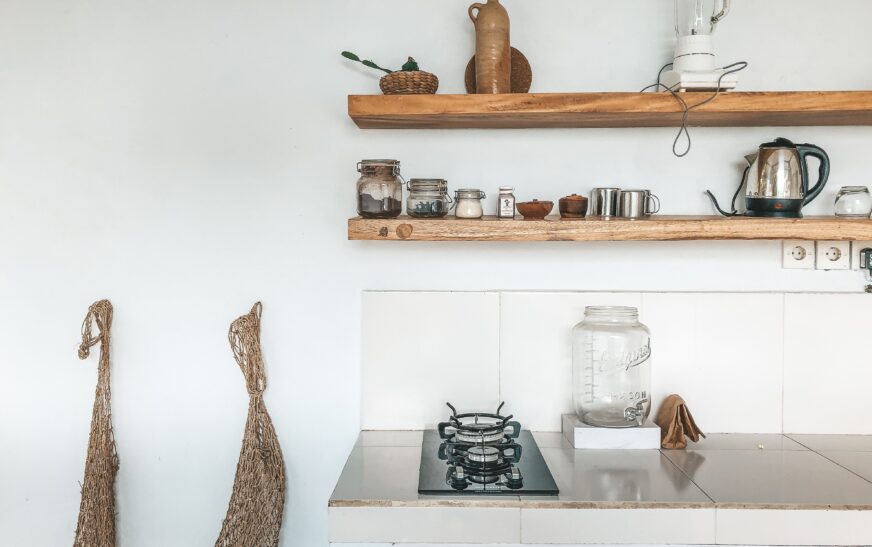
Vertical spaces in our kitchens can be extremely useful if used properly. To organize them correctly, we can install shelves, hooks and pegboards on walls or cabinet doors. They can serve us as great places to store all kinds of cooking utensils, dishes and spices we may need when preparing meals.
Moreover, we can also use the idea of hanging our pots and pans on special hooks installed on walls. Besides, if necessary, we can combine hanging and storing items inside containers.
Maximizing Countertop Space
Countertop surfaces are one of the key elements that should be optimized in kitchens to avoid mess. We can do this by introducing various countertop organizers to store different items on those surfaces. They may include hooks, baskets, containers, magnets and even stickers, if necessary.
Moreover, when optimizing countertop space, we should think about workflow because we can place things we use more frequently closer to us. As for other items, it will be better to put them somewhere else on the surface of a counter.
Maintenance Routine Implementation
Finally, we can introduce a special maintenance routine that will help us keep everything in order after cooking. We can create a schedule that will include all the necessary actions to be taken on a regular basis to ensure proper functioning of our kitchen.