
The surface of the earth changes constantly because of the constant movement of lithosphere. Lithosphere is divided into several huge plates that slowly move over a more liquid layer known as the asthenosphere. Even though the science of plate tectonics is rather complicated, it can be explained very easily and thus made accessible for everyone who wants to know more about the structure of the earth. Understanding plate tectonics in simple terms requires you to familiarize yourself with the basics and then dive deep.
Plate Tectonics in Simple Terms: Basics Understanding the basics of the science of plate tectonics requires you to realize that the earth’s lithosphere moves and interacts with other plates. It consists of several huge plates that continuously move due to different natural forces. Below lithosphere, one can find another layer called asthenosphere – it is a part of the Earth’s mantle that can flow. Plates are always interacting because their movements cause some areas to stretch, break apart, or compress.
Such places where interaction occurs are called boundaries, and they usually create different kinds of landforms like mountains, volcanoes, and earthquakes. There are three kinds of boundaries: divergent, convergent, and transform. At divergent boundaries, two plates diverge from each other. They separate and form a new kind of rock called basalt. In turn, convergent boundaries are characterized by the movement of two plates towards each other resulting in the formation of mountain ranges. Finally, at transform boundaries, two plates move past each other, sliding horizontally.
Movement of the Earth’s Plates and the Forces Involved The earth’s plates are constantly moving because of some natural forces such as convection currents, slab pull, and ridge push. First of all, the process of convection currents occurs in the Earth’s mantle due to heat generated by its core. Second, at subduction zones, the weight of the oceanic crust that is sinking to the earth’s mantle acts as an additional force pulling plates down. Third, the formation of new crust and magma in the ocean causes ridge push as this area gains extra weight pushing plates away.
Thus, we can conclude that forces acting on plates interact and influence their movement. The most powerful natural phenomenon that drives plates is the slow movement of mantle in convection currents because it causes plate movement. However, the processes occurring near the Earth’s surface also contribute significantly. Thus, the process of new crust formation makes plates move, while the new crust becomes even denser adding up to forces acting on plates.
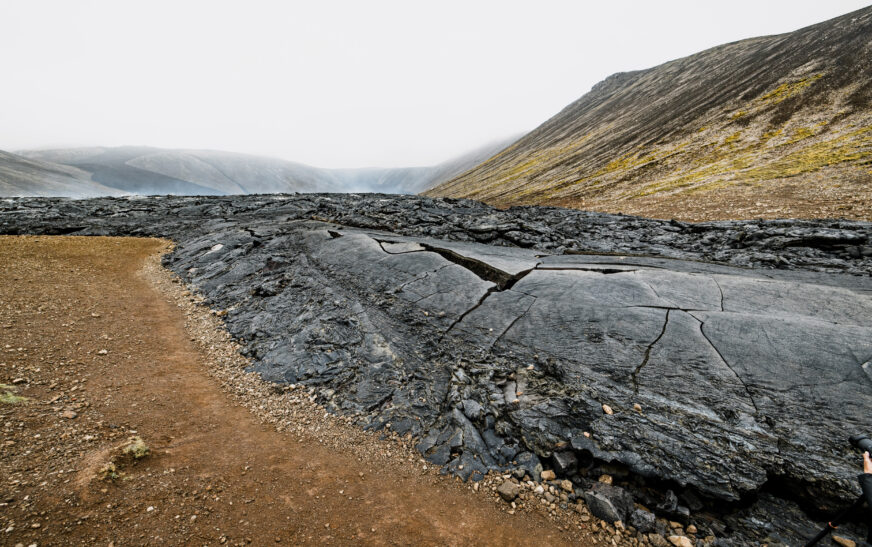
Plate Boundaries and the Formation of Different Landforms The movement of lithospheric plates causes the formation of certain landforms including mountains, volcanoes, and earthquakes. Mountains mostly form at convergent plate boundaries. For example, the Himalayan mountain range emerged after the collision of Indian and Eurasian plates. Volcanoes may form both at convergent and divergent boundaries. The reason is the emergence of magma at these boundaries due to plate movements. For instance, the chain of volcanic islands – Hawaii – emerged at the location of a hotspot of the Pacific plate.
Release of Energy: Earthquakes The sudden release of energy accumulated by rocks as a result of plates’ movements results in earthquakes. Such energy is accumulated by rocks until the level of stress exceeds the rock’s capacity, which leads to its rupture and energy release. As a result, earthquakes occur. The kind of earthquake that happens depends on the kind of the plate boundary.
For example, at transform boundaries, plates interact by moving past each other in a horizontal manner. Therefore, at these boundaries, we observe earthquakes caused by such plate interactions. On the other hand, at convergent boundaries, plates move in the same direction and thus collide. This results in earthquakes because of subduction of plates.
Effects of the Process of Plate Movement on the Environment The movement of the earth’s lithosphere has a huge effect on our planet’s ecosystem. Among other effects, it influences the structure of the earth forming oceanic and continental crust. Moreover, this process is responsible for the appearance of mountains and volcanoes. Finally, earthquakes are caused by the movement of the earth’s plates and they significantly change the environment destroying buildings and infrastructure.
Explaining Plate Tectonics Simply Explaining plate tectonics simply requires breaking the whole complicated process into small parts that are easy to understand. You need to pay attention to what is happening to the earth’s plates, what forces act on them, and what landforms emerge. Using simple words, you will be able to understand plate tectonics easily and quickly.
Conclusion and Next Steps Understanding plate tectonics is essential to learn about the geological processes taking place on our planet. Having considered different processes that make up plate tectonics, you can grasp its basics and learn how it works. Whether you are studying geology or simply want to know more about our planet, plate tectonics will definitely become your friend.