
There are many fascinating and interesting systems on our planet. One of such systems is an ecosystem. Ecosystems are necessary for supporting our planet, as they produce oxygen and serve as habitats for different kinds of flora and fauna. However, not all people know much about ecosystems and cannot quickly learn something about this issue. This article will briefly discuss some aspects associated with ecosystems and how people may learn about them fast.
What Is an Ecosystem?
First of all, it is crucial to understand what is meant when discussing an ecosystem. An ecosystem is a community including both living and non-living components which interact with each other in some particular environment. Plants, animals, fungi, microorganisms, and physical parts of the world like soil, water, and air are the components included into ecosystems. Ecosystems differ significantly. For example, there are quite small microcosms in terms of space but huge in size of the communities they include (like puddles of water). At the same time, some ecosystems cover vast territories like coral reefs or rainforests.
Different Components of an Ecosystem
It is essential to know about the components of an ecosystem in order to better comprehend their interactions and processes within it. To illustrate this statement, let us look at a simple example related to ecosystems. A pond ecosystem will be considered here. There are some plants like algae and water lilies growing in a pond, thus becoming the habitat for various animals like fish and insects. In addition, there are a lot of microorganisms in the water living in this pond like bacteria and protozoa which assist in decomposing organic elements and recycling them. Moreover, soil and air surrounding a pond also contribute to the ecosystem.
Types of Ecosystems
As it was already mentioned before, ecosystems may be quite various. Several main types may be distinguished here like terrestrial ecosystems, freshwater ecosystems, marine ecosystems, and wetland ecosystems. Each of these types has its own specialities. For instance, terrestrial ecosystems include deserts, forests, and grasslands which differ significantly by climate, geology, and hydrology. The communities of living organisms living in different terrestrial ecosystems are different as well due to different ecological conditions of the territories where they live.
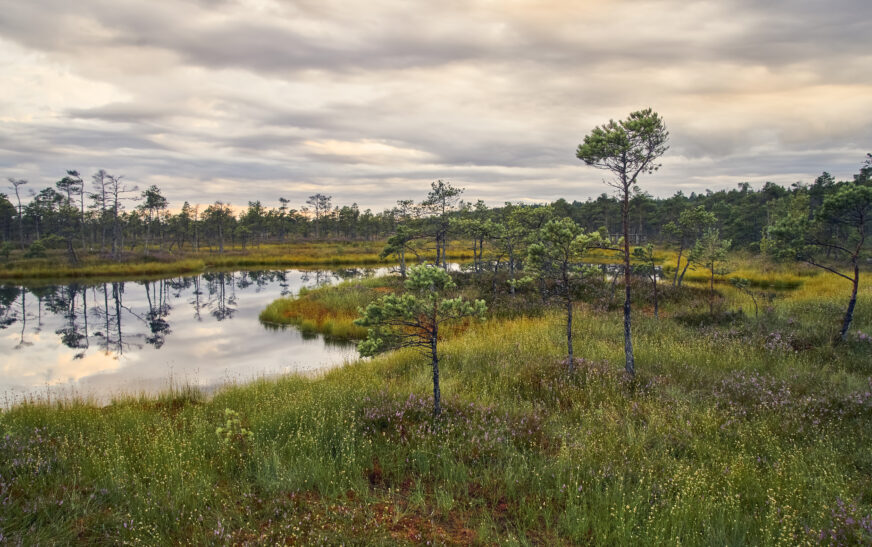
Another type of ecosystem under consideration are freshwater ecosystems, i.e., ecosystems like rivers, lakes, and ponds. Marine ecosystems involve various types of seas like coral reefs, estuaries, or open oceans. Finally, wetland ecosystems include such examples as marshes, swamps, or bogs.
Food Web
In any case, it is necessary to know more about a food web as it describes relations between various predators and preys within an ecosystem. There are various ways of transferring energy from one organism to another in ecosystems: consumption, decomposition, etc. Such a transfer of energy is important in order to establish an ecosystem balance and support its diversity.
To illustrate this issue, let us consider an example of a food web in a grassland ecosystem. Grasses and other plants serve as the foundation of a food web. Animals like deer and rabbits consume plants and become the target for their predators like coyotes and hawks. In its turn, the animals like coyotes become a source of food for even bigger animals like mountain lions or bears.
Ecosystem Services
Furthermore, there are some special ecosystem services which help in performing a number of functions necessary for both ecosystems and humans. The services include the processes of regulating climatic conditions, distributing water, forming soil, pollination, and so on.
Learning about Ecosystems
Now it becomes clear why people have to learn about ecosystems fast and what should be done for that. Some tips which will help with learning about ecosystems are listed below:
Read introductory articles and books to comprehend basics;
Explore relevant online sources with information concerning specific topics or certain ecosystems;
Join communities interested in ecosystems in order to obtain useful experience from other participants;
Participate in various projects devoted to citizen science in ecosystems.
Conclusion
Thus, ecosystems are quite complex and interesting communities which include different kinds of flora and fauna. In order to better understand them and appreciate, it is required to learn something about ecosystems fast. There are different ways to learn about them effectively which are discussed above.