

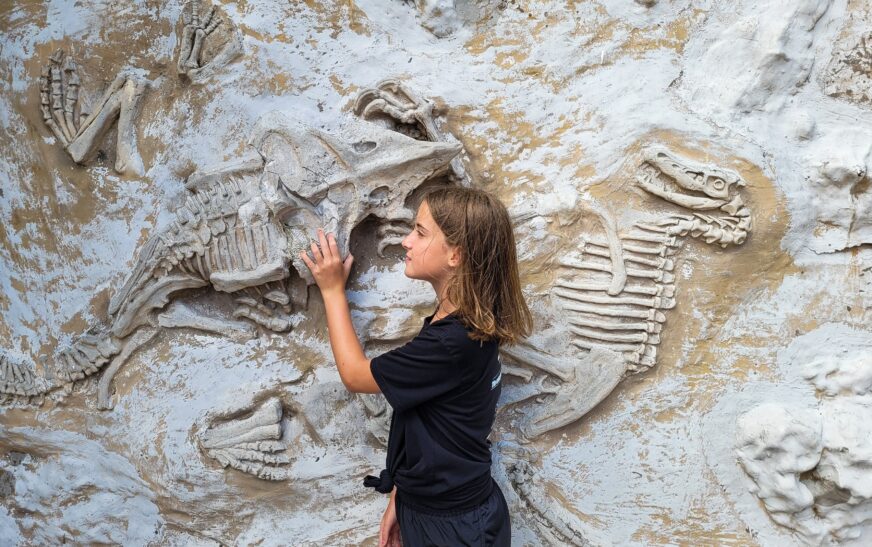
Fossils have been my favorite topic since the days when I started learning geology. There is so much information that scientists could gather by studying creatures that inhabited our planet million years ago! If you’re also fascinated by fossils, then you’re welcome to find out more information about them. In order to learn more about fossil science, you’ll have to master basics about geology, sedimentary rocks, etc.
Types of Sedimentary Rocks and Their Properties
"Sedimentary rocks" refers to rock types that are formed as a result of deposition and compression of sediment particles. The most common types of sediments include limestone, shale, and sandstone. Different types of sediment have specific characteristics, which affect the way fossils are formed. For instance, shale is composed of fine sediment particles. This makes it easy for the organism to get stuck inside the rock. Furthermore, it often undergoes high pressure and heat, which results in perfect fossil preservation.
In contrast to this, limestone contains a lot of calcium carbonate. The majority of this rock originates from the decay of organic matter, especially shell remains. Limestone isn’t subjected to heat and pressure. Nonetheless, this rock offers good conditions for fossilization.
Process of Lithification and Its Impact on the Quality of Fossils
This process refers to the conversion of sediments into rocks due to temperature, pressure, and chemical reactions. As a result of lithification, sand particles and others start to cement, which leads to the formation of stone. Therefore, you may consider lithification as the crucial element of fossil formation. Usually, the process of lithification requires thousands of years to complete; however, it depends on the nature of sedimentary layers and geologic processes.
Many geologic processes may influence the duration of lithification. For example, high temperature and pressure increase the speed of the process, thus accelerating the formation of fossils. Low temperatures and low pressures lead to inefficient lithification process, which means poor quality of fossils and inability to protect them from erosion. That’s why it is so hard to find fossils sometimes!
Techniques for Identifying Fossils
It might seem rather simple to identify fossils because you only need to recognize what the object looks like. Nonetheless, this task isn’t easy as it may appear at first glance. There are so many kinds of fossils – bones, shell fragments, pieces of plants and so forth – that require special attention to be paid to each. You can try various techniques such as geological, paleontological, stratigraphic, and so forth. Geological techniques focus primarily on the study of sediment in which fossils are formed. Paleontological techniques include analyzing the nature of the fossil itself and its relation to contemporary species.
To make your research successful, you need to analyze various characteristics of fossils including morphology, color, texture, etc. You may try studying fossils located in neighboring rocks. Sometimes you can find the traces of animal movements, so-called fossils of footprints, which show how large the animal was.
Importance of Stratigraphy in Dating Fossils
Determining the age of fossils is essential for uncovering secrets of extinct species. However, in order to perform this task accurately, specialists need to know stratigraphic principles. Stratigraphy includes the analysis of the layers of sediment. It is used to determine their ages and create chronology of geological processes. Why is stratigraphy so important?
First of all, this method can be applied in order to analyze geological history of a territory and estimate the age of geological objects. Grand Canyon can serve as an illustrative example. Here you can observe distinct strata, which allows determining their ages. Moreover, this method allows dating fossils found in those layers and acquiring important information about geological history.
Application of Fossils in Science and Industry
There are many ways how fossils can be applied in different industries. First of all, they are used in studying the origin of fossil fuels, such as oil, gas, and coal. Fossils of animals and plants found in those territories can provide specialists with necessary information about the origins of those resources. Apart from this, fossils are important for developing new treatments. Many medicines are discovered based on fossils and their connection to contemporary species. For example, the discovery of antibodies helped doctors develop cures for various diseases.
Learning More About the Science of Fossils: Tips
Here are several helpful tips for studying fossils:
* Familiarize yourself with different types of sedimentary rocks;
* Search online for articles on fossils;
* Join local fossil hunters to get some additional knowledge;
* Study fossils at museums and collections;
* Sign up for courses related to fossils science.
Following these tips, you can expand your knowledge greatly!