
Gravity is among the most crucial phenomena existing in the Universe. It is considered to be one of four fundamental interactions. People living in America feel the effects of this interaction on a regular basis. They remain anchored to the planet’s surface preventing them from floating to outer space. Studying in colleges, Americans learn about gravity and its features, although sometimes it may seem difficult to understand. The objective of this paper is to facilitate learning about gravity for everyone.
Gravity in Plain English
Gravity is an invisible force attracting any objects having mass. The greater the mass, the bigger the attraction.
As a result, since Earth is a massive object, it produces gravitational fields attracting everything towards its center. For this reason, people jumping high up in the air land on the ground.
The illustration below helps to visualize the concept. If imagining Universe as a large trampoline, then placing a huge bowling ball in the middle results in a notable depression. When moving a smaller ball next to it, it follows the trajectory of the curve and moves closer to the large ball. Hence, the presence of a massive body causes curvature in space around it and attraction of other bodies.
Gravity Throughout History: Philosophers Versus Scientists
The phenomenon of gravity existed before humans appeared on Earth; therefore, they attempted to explain the answers to the questions arising. Philosophers of ancient times tried to formulate some theories explaining gravity.
For example, philosopher Aristotle argued that heavier objects fall faster towards the ground. Several centuries later, Italian scientist Galileo Galilei challenged the Aristotle’s ideas in the 1500s. He demonstrated that objects with different mass dropped from the same height fell simultaneously if ignoring air resistance. Allegedly, Galileo conducted his experiment from the top floor of the Leaning Tower of Pisa. This achievement helped to pave the road to further research.
Sir Isaac Newton formulated the mathematical aspects of gravity and introduced a law of universal gravitation in the late 17th century. According to him, any bodies are attracted to each other depending on the proportionality to masses and inverse proportionality to distance between them squared.
The discovery by Newton showed that gravitational force making apples fall to the ground is the same one keeping the planets revolving around the Sun. This law was significant for space explorations performed by Americans and remains relevant even nowadays. Today NASA relies on the formula while conducting daily calculations.
Gravity According to Einstein: Relativistic Approach
In the beginning of the last century, another revolution in the area of physics emerged thanks to Albert Einstein. He developed the theory of relativity stating that gravity is a consequence of curvature in the space-time generated due to presence of matter.
Using the analogy of elastic fabric, placing an extremely heavy body in the middle leads to notable changes in the shape of fabric. Objects moving next to it follow the trajectory of the shortest distance within space-time curving.
The statements by Einstein include:
- Light gets deflected by gravity.
- Clock ticks slower in areas of strong gravity.
- Gravitational waves ripple through the space.
Finally, Einstein’s predictions resulted in detection of gravitational waves in 2015 by scientists working in the LIGO observatory. Nowadays, Americans play an important part in researching gravitational waves.
Gravity on Earth: Variations in Its Values Worldwide
Notably, gravity on Earth varies with location of objects.
The following factors affect variations in the gravitational value:
Latitude: Equator on Earth is located farther from its core in comparison with poles. Hence, the centrifugal acceleration acts in reverse direction and reduces gravitational pull. Consequently, gravity at Miami is weaker than in Anchorage, Alaska.
Altitude: The farther objects are from Earth, the smaller is the pull of gravity. For example, gravity in Denver is lower than in New York City.
Geological factors: Density differences of rocks beneath the surface lead to changes in gravity allowing finding oil reserves and minerals.
On average, gravity on Earth’s surface is equal to 9.8 meters per second squared (32 feet per second squared). Thus, gravity makes an object accelerate 32 feet per second squared for each second of its free fall. At a point where the air resistance balances velocity, speed stabilizes.
Simple Experiments to Learn About Gravity at Home
Hands-on experiments may become useful while exploring gravity:
Coin and feather fall in vacuum: As stated above, Galileo discovered that all objects fall to the ground simultaneously.
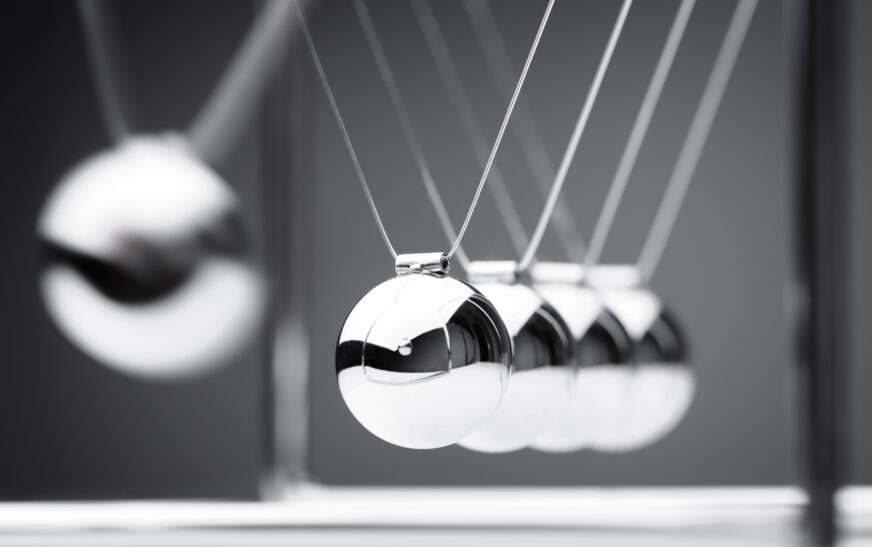
Swinging pendulum: Creating a pendulum with a string helps to find out that period depends on its length but not on mass.
Water bottle rocket: Applying the knowledge about Newtonian mechanics and gravity, the water bottle rocket flies up in the air.
Installing an accelerometer application showing current acceleration (it should be equal to 1g).
Such activities are often practiced by American students in school and college.
Gravity in Space: Why Astronauts Float in Space
Many Americans share one myth about gravity: it does not exist in space. However, it is not true.
Traveling inside the International Space Station that orbits 250 miles away from Earth, astronauts feel nearly 90 percent of Earth’s gravitational field. Nonetheless, they float in the spaceship due to falling towards Earth. Besides, they move sideways with such a high speed of 17,500 miles per hour that they constantly miss Earth and keep orbiting. This condition is called microgravity.
Being in microgravity conditions, scientists conduct a lot of experiments in zero gravity analyzing various physical, biological, and material processes. According to Artemis project implemented by NASA, Americans will return to the Moon soon. Gravitational acceleration on Moon is six times lower than on Earth.
Why Is Gravity Important for Americans ?
Regardless of incredible nature, gravity plays an important role in Americans’ lives:
Construction business: When constructing tall buildings such as skyscrapers in cities like New York and Chicago, engineers take into account gravity.
Sports: Even professionals playing basketball in the NBA league feel effects of gravity.
Health: Astronauts suffer muscular and bone atrophy spending long periods in microgravity.
Technology: Correct functioning of satellite navigation systems is impossible without relativistic correction.
Climate and geology: Gravitational tidal forces shape waves, continents, and influence weather.
Black Holes, Dark Matter, and Other Mysteries of Gravity
The largest gravitational force is observed inside black holes – collapsed stars. The strength of gravitational pull there is tremendous, and not even electromagnetic radiation like light can escape. In 2019, scientists worldwide managed to make the first image of a supermassive black hole located in the center of galaxy M87. The process took place with the participation of an international team of researchers including representatives from the US.
Currently, scientists believe that only 5 percent of Universe is formed by normal matter. Additionally, 27 percent consists of mysterious dark matter not capable to be directly observed, however, producing gravitational effects. Another part is dark energy creating accelerated expansion of the Universe.
Researches related to gravity may lead to remarkable advances.
Tips to Teach Kids About Gravity
Parents and teachers use multiple approaches trying to teach kids about gravity:
- Trampoline and various balls
- Watching astronauts walking on the Moon and space stations
- Objects with different forms fall down equally fast
- Comparison of gravitational and magnetic attraction
The above-mentioned recommendations can be applied during teaching gravity to children.
Gravity in the Future: Research Trends
At present, Americans perform studies related to space physics in NASA, MIT, and Caltech. The new era of space exploration will require testing gravity in extreme conditions, researching gravitational waves from early Universe, and checking whether gravity correlates with quantum mechanics.
The forthcoming project of NASA consists in designing gravitational wave detector in space called LISA.
Conclusion
To conclude, gravity is the universal attractive force acting between bodies with mass. Despite significant developments starting from Newton discovering how an apple falls down to Einstein revealing the secrets of space-time curvature, mankind did not manage to change its basic principle: mass forms space-time curvature determining behavior of bodies.