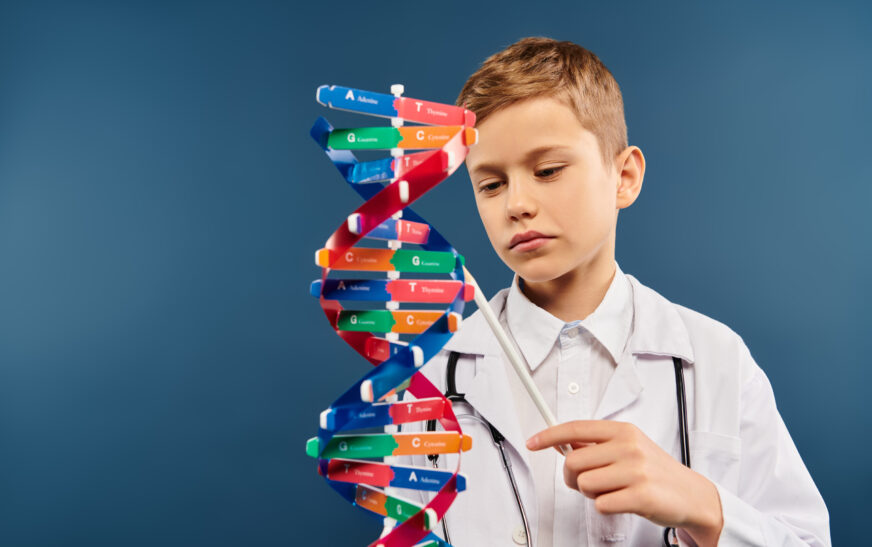


In order to explain DNA in layman terms, it would first be necessary to know some background. Indeed, there is a lot to learn when trying to understand genetics, and DNA is among those things that are important to be known. First, it is necessary to know what DNA is. To begin with, the DNA molecule is quite complicated since it consists of four chemicals – adenine, guanine, cytosine, and thymine. Moreover, these chemicals create a double helix structure that contains all the information needed to make living things.
Each human body consists of trillions of cells and each cell of the body contains an entire DNA. Moreover, this is very important because DNA is the source of everything. In fact, thanks to the DNA people have the ability to pass on their physical appearance, abilities, and predisposition to particular diseases. Hence, the study of DNA becomes very crucial for genetics.
The Basics of DNA Structure
As was said above, the DNA structure is quite complicated. First of all, it should be mentioned that DNA is built by two strands of nucleotides. These nucleotides consist of sugars, phosphates, and nitrogenous bases. More precisely, there are four nitrogenous bases: adenine, guanine, cytosine, and thymine. It is believed that a sugar and phosphate molecule create the backbone of DNA while the nitrogenous bases stretch outward creating rungs of DNA ladder.
Adenine always binds with thymine while guanine binds with cytosine. Therefore, these combinations are crucial for DNA and its stability as well as replication. It is noteworthy that the structure of the molecule looks like a twisted ladder; thus, the sugar and phosphate molecules become its sides while nitrogenous bases form the rungs.
The Process of DNA Replication
When considering the process of DNA replication, it should be said that it takes place in order to prepare the body for the reproduction and continuation of life. It means that the whole body is duplicated before cell division occurs. In order to copy itself, DNA needs special enzyme that opens up the double helix and then forms a new strand based on the previous one. This process takes place according to the same rule as in the case of existing strands.
Moreover, it is worth mentioning that this process is rather accurate because of proofreading enzymes that fix possible mistakes. Finally, DNA becomes coiled up tightly to ensure that it fits inside a cell. Thus, the main thing about replication is that this process involves the work of DNA polymerase.
Why Is DNA So Important for Genetics?
First of all, it is worth saying that all features of humans, from height to hair color, depend on their DNA. Moreover, DNA determines whether or not people will suffer from a particular illness or disorder during their lifetime. There are more than 20,000 genes in the human genome and each of these genes codes a protein responsible for particular functions. Thus, genetics is extremely important as people need to understand how the body works.
The Role of DNA in the Development of Diseases
First, it is necessary to mention that many genetic disorders are connected with specific DNA mutations. For instance, sickle cell anemia or cystic fibrosis are among the most widespread genetic illnesses caused by mutations in DNA. These changes in DNA affect the structure and work of proteins and, thus, result in disorders.
In addition, there is another condition that occurs due to DNA. The term cancer usually refers to the abnormal division of the cells which leads to the development of tumors. Usually, cancer is associated with DNA mutations that influence cells’ behavior and cause them to grow out of control. Thus, DNA is closely related to many diseases.
Future Researches of DNA
It is clear that scientists did not stop studying DNA. As time goes by, there appear different tools that help researchers to change DNA or even delete genes from it. Consequently, nowadays it is possible to edit DNA that makes it possible to treat genetic disorders and illnesses in general. Also, the Human Genome Project helped to discover the whole human genome and create personalized treatments.
Conclusion
Thus, when discussing the importance of DNA, it should be mentioned that without proper knowledge, one cannot fully understand genetics. The exploration of the structure, replication, and importance of DNA is vital to be able to get to know something more about the world around us. Moreover, the future researches of DNA might provide some valuable information about diseases.