
We use our eyes every day but rarely think about them. However, there is much going on in our bodies. Learning the science of the eye will help you understand the intricacies of its functioning and how crucial your eye health is. This knowledge will also help you preserve it properly. Let us start discussing the eye’s anatomy, some vision facts, and mechanisms of its functioning.
Eye Anatomy
Perhaps, you will be surprised to know that our eye consists of three components: light, structure, and function. Thus, every eye has specific structures responsible for making an image on the retina.
The transparent outer part of the eye is called the cornea. Cornea’s main function is to allow light to enter the eye and form an image. Right behind the cornea, one can find a colored iris that regulates how much light passes into the eye. This regulation takes place thanks to the opening of the eye that is located in the center of the iris and called a pupil.
Behind the iris, there is a lens which can change its shape. Thanks to this characteristic of the lens, we can adjust our glasses’ prescription in order to see everything properly and focused. Accommodation refers to the process of light focusing in the retina thanks to the lens and cornea.
As light travels inside the eye through the cornea and lens, it enters the anterior chamber that has a clear fluid. This fluid maintains the correct pressure in the eye. Afterward, light reaches the posterior chamber that has gel. This gel gives support to the shape of the eye and nourishes the retina.
Retinal Structure
The retina is a special part of our eye that helps convert light into electric pulses. This thin layer of nerves is made up of photoreceptors (rods and cones), bipolar cells, ganglion cells, and amacrine cells. These cells convert light into electric pulses, send it to the bipolar and ganglion cells, and deliver it via the optic nerve to the brain.
There is a unique part of the retina called macula. Macula allows us to have central vision. This small area has many cones that enable us to see fine details and colors. The fovea is located right in the center of the macula. It allows us to see everything we aim to look at.
The Process of Vision
The process of vision is rather complicated. The combination of the eye’s structure and its functioning with the brain’s ability to interpret visual signals creates a certain image in the mind of a person. First of all, light enters the eye and is focused in the retina with the help of the cornea and lens. Afterward, light converts into electric pulses that get sent to the brain via the optic nerve.
Once in the brain, the signal gets interpreted and transformed into a picture of what we see. Interestingly, the brain does the job of creating an image out of the received data. Furthermore, the brain can use binocular vision to form an image from two pictures received from both eyes and thus create a stereoscopic image.
Seeing Color
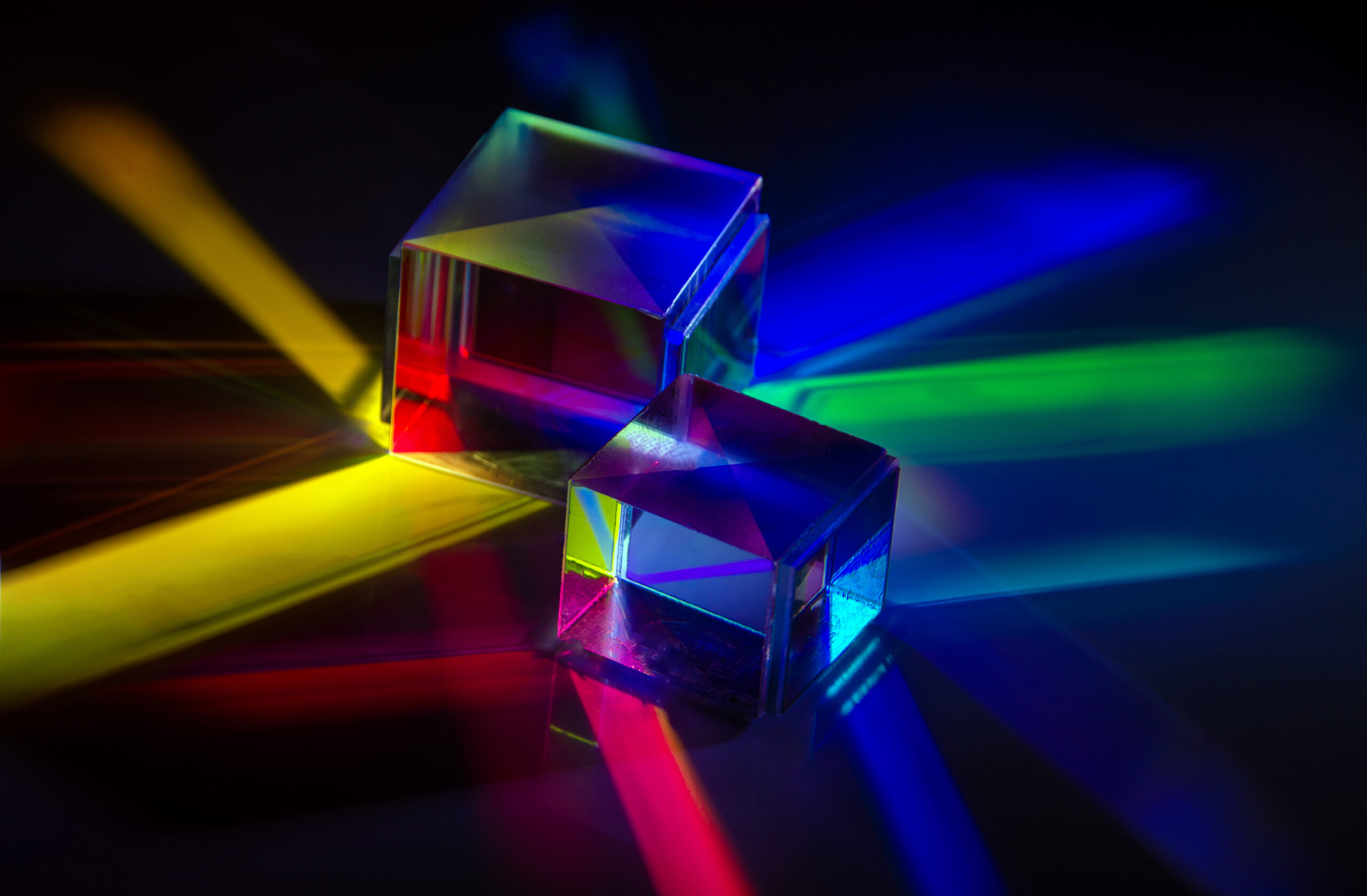
People can distinguish colors because of special receptors in the retina that react to particular light waves. Thus, we receive different types of light waves and transform them into specific colors. There are three kinds of receptors in our eyes: long-wavelength cones that respond to red light, medium-wavelength cones that react to green light, and short-wavelength cones that respond to blue light.
Once light enters our eye, it activates certain receptors that respond to it. Those receptors send an impulse to our brain that translates it into a specific color. However, the perception of colors is rather complicated and varies greatly depending on a person.
Light and Our Eyes
As we have said earlier, human eyes are capable of distinguishing light in the spectrum of 400 nm (violet) to 700 nm (red). There are three ranges of light sensitivity: photopic (500 – 700 nm), mesopic (400 – 700 nm), and scotopic (400 – 500 nm).
Human body needs light exposure in order to synchronize our circadian rhythm. This task is performed by suprachiasmatic nucleus located in the hypothalamus. It monitors changes in daylight conditions and adjusts such bodily functions as temperature, melatonin production, hormone release, digestion, and other.
Importance of Eye Health
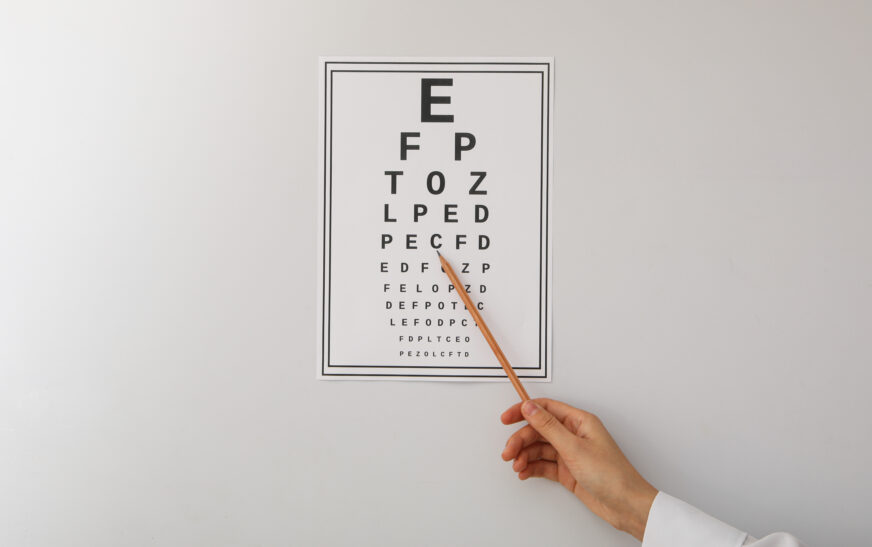
According to the American Academy of Ophthalmology, the only way of preserving good eye health is frequent eye check-ups. If needed, problems with vision like myopia or hyperopia can be corrected with the help of glasses or lenses. Cataract removal and glaucoma treatment require surgery or medical assistance.
Conclusion
As we can see, there is much to discuss about our eyes and the science of vision. Now that you know how our eyes work and how to maintain good eye health, you can move to studying more about vision and eye-related issues.
Consider scheduling a consultation with your eye doctor or attending some online courses on this matter.