

Learning about microorganisms at home is a fascinating way to explore the unseen world around us. Even if you lack any scientific background or knowledge, microorganisms will help you dive into the amazing world and find out new things that will surprise you. Moreover, microorganisms are widely used in science, so you have plenty of opportunities to apply them for educational or research purposes. In addition to this, it will help you stay healthy because microorganisms live in our bodies and provide us with immunity.
Understanding Microorganisms
Microorganisms are small living organisms that cannot be seen with the naked eye. They are present everywhere, and you may find them both outdoors and indoors. Microorganisms play a significant role in our lives, and they perform a number of important tasks for nature. They break down pollutants, cycle nutrients, participate in the decomposition process, and perform other essential operations. Microorganisms are vital for people because they boost immunity and protect us from diseases. However, there are also harmful microorganisms that cause illnesses and can become dangerous if left unattended.
Types of Microorganisms
The following types of microorganisms can be distinguished:
Bacteria – unicellular organisms that can be aerobic or anaerobic. They are present everywhere, and they are often used in laboratories and households because they are easy to breed.
Viruses – tiny agents without cellular structures. They reproduce inside the cells of other organisms and cannot survive outside the host body.
Fungi – organisms without chlorophyll and vascular systems. They grow in the form of thread-like filaments and reproduce through spores.
Protozoans – unicellular animals that usually reproduce through mitosis. They move actively, but they lack cellular walls.
Setting Up a Home Microbiology Lab
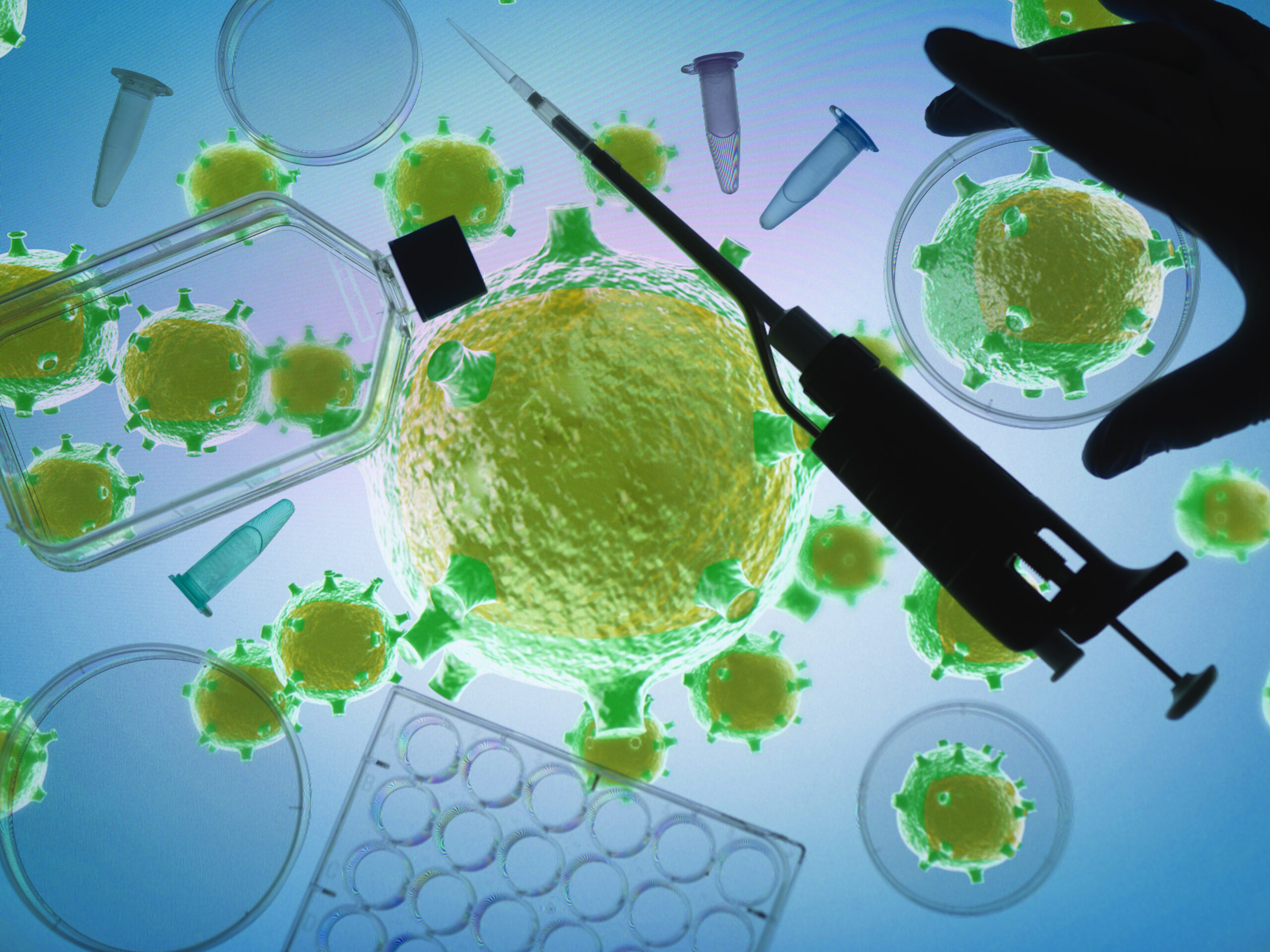
Creating a home microbiology lab is a good idea because it provides ample opportunities to study microorganisms. It does not require much time and money, and anyone can do this. To start, you need a laboratory station where you can place all the necessary items. Next, you will need some equipment to examine the samples and obtain the desired results. The following pieces of equipment will be needed:
A microscope (compound or stereo microscope).
A slide holder.
A slide tray.
A coverslip.
A pipette or dropper.
A variety of slides and coverslips.
In addition to the equipment listed above, you will also need a sample of microorganisms. You can use different sources to acquire the material, such as soil, water, food products, etc. Regardless of the source, you should use appropriate safety protocols when handling microorganisms. They involve wearing gloves, working in a ventilated room, and following other recommendations provided by the manufacturer.
Microscopy Techniques
Working with microscopes is an integral part of examining microorganisms because it allows you to observe them under the magnifying glass and get detailed information about their structure and composition. The following microscopy techniques can be applied:
Brightfield microscopy: the sample is illuminated with light.
Darkfield microscopy: the sample is observed against the dark background.
Phase contrast microscopy: a special lens creates contrasts between the sample and the background.
When working with microorganisms, you should use appropriate sampling techniques. To do so, you can employ a pipette or dropper, and collect the sample from the source. You should also ensure that the container contains enough microorganisms.
Preparing Microscopy Slides
It is relatively easy to prepare microscopy slides. You should take a drop of a microorganism sample and put it on a microscope slide. After that, you should cover the sample with a coverslip and eliminate all air bubbles. Next, you can observe the sample using a microscope. While preparing the slides, you should use appropriate techniques to avoid contamination and preserve the microorganisms. You should also use a sterile sampling device and work in a clean environment.
Observing Microorganisms
You can observe microorganisms using a microscope after preparing the slides. When doing so, you should follow proper safety protocols. You should wear gloves and operate in a well-ventilated room. During observations, you can use appropriate techniques to identify and classify the microorganisms. You can refer to a guide or consult an expert in the relevant area. While observing microorganisms, you should pay attention to the following features:
Shape.
Size.
Color.
Movement.
Using Microorganisms for Science and Education
You can use microorganisms for different scientific and educational purposes, such as investigating the impact of environmental factors, studying the behavior of microorganisms in different conditions, searching for treatments for the disease, developing new applications in biotechnology, etc. Working with microorganisms in science and education can be very enjoyable for students because it helps to understand their structure and significance.
Safety Precautions
You should take appropriate safety measures when working with microorganisms to reduce the risk of contamination and infections. You should wear gloves and a lab coat when handling microorganisms and work in a ventilated room to prevent the accumulation of gases. You should use a sterile sampling device to collect and handle the samples, and dispose of waste correctly to avoid contamination.
Conclusion and Call to Action
Working with microorganisms at home is a fascinating process that can be interesting even for people who have no background in science or biology. As shown above, you can set up a simple laboratory at home and learn a lot about microorganisms. If you are interested in science, education, or just want to explore nature, microorganisms can be helpful because they provide numerous opportunities for discoveries and research. Therefore, we recommend trying to use microorganisms in science and education, and see what benefits they bring.