
The human respiratory system refers to a complex collection of organs and tissues that assist in breathing and gas exchange. In fact, it starts at nostrils and extends to lungs, which play critical roles in the health of a human being. Thus, a deeper insight into the processes occurring inside the respiratory system is necessary in order to understand how they operate.
Anatomy of the Respiratory System
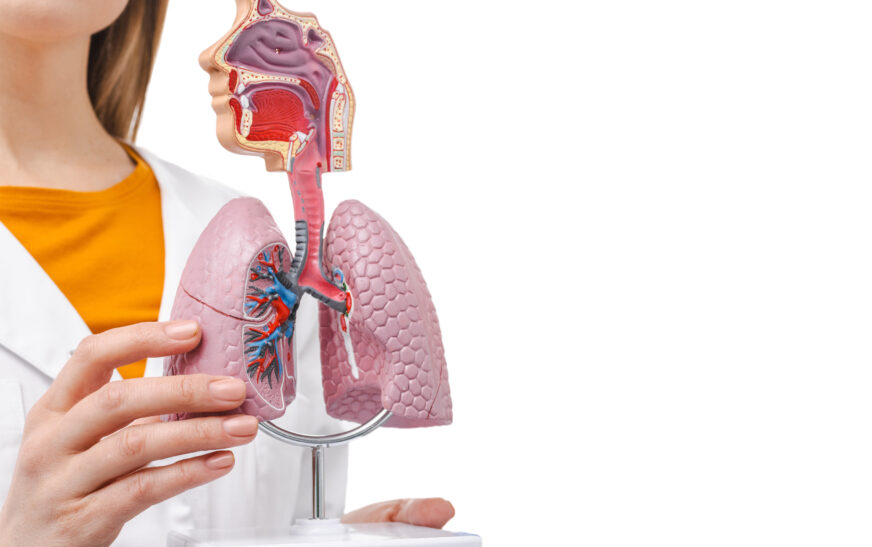
Firstly, one should note that the nostrils are linked to the nasal cavity via the nasal passages. The air passes through the nasal cavity, filtering dust thanks to tiny hairs called cilia. After that, the air goes through the pharynx, which is the path shared by both food and air. Later on, air enters the larynx, also known as the voice box, and goes to the trachea or windpipe. The trachea splits into two main bronchi, one for each lung. The bronchi further subdivide into bronchioles, which go to alveoli. Lungs are surrounded by pleura – a thin membrane allowing them to facilitate breathing.
Breathing Mechanisms
Breathing is a complex and delicate process involving a set of nerves and muscles, all of which have a distinct role. As the air enters lungs, passing through bronchioles, it reaches alveoli. At this stage, oxygen is absorbed by the blood, while carbon dioxide is removed from it. To achieve this result, the expansion and contraction of lungs take place due to the activity of the diaphragm. When the diaphragm contracts, the chest cavity increases its volume, filling with air. Once it relaxes, the chest cavity becomes smaller, and air is forced out of lungs.
Breathing Mechanisms
In addition, there are three major types of breathing that happen in the respiratory system: inhalation, exhalation, and gas exchange. As explained above, the former refers to drawing the air in the lungs, while the latter implies pushing it out of them. Finally, gas exchange takes place at the level of alveoli and implies absorption of oxygen by the bloodstream as well as removal of carbon dioxide from it.
Inhalation
As opposed to exhalation, inhalation is a rather complicated process that involves various nerves and muscles working simultaneously. When one inhales, the diaphragm contracts, while the intercostal muscles located between the ribs start contracting as well. Due to that fact, the chest cavity expands, creating a negative pressure inside of it. Thanks to it, the air rushes through nostrils or mouth towards the lungs. It enters through the trachea, bronchi, and bronchioles and finally reaches the alveoli.
Exhalation
Unlike inhalation, exhalation is a passive process during which the diaphragm relaxes while the chest cavity becomes smaller. Therefore, air starts getting out of lungs through the nostrils or mouth. During this process, the intercostal muscles keep contracting, thus helping in raising the diaphragm and making the volume of the chest cavity even smaller.
Respiratory System Disorders
Although the respiratory system usually operates smoothly, there is still a range of possible disorders and diseases that might influence its proper functioning, including asthma, chronic obstructive pulmonary disease, and pneumonia. While the first one is caused by allergies, the latter two tend to be either the result of unhealthy lifestyle or bacterial/viral infections.
Understandably, understanding the human respiratory system is necessary in comprehending and overcoming respiratory disorders and diseases.
Asthma
One of the most common respiratory disorders is asthma, which is a chronic inflammatory condition of the airways, implying difficulties in breathing. It is usually caused by allergens such as pollen or dust mites. However, the disease can be easily overcome using different treatments, namely inhalers.
Chronic Obstructive Pulmonary Disease (COPD)
Another possible disorder of the respiratory system includes chronic obstructive pulmonary disease (COPD). Similarly to asthma, COPD makes breathing difficult, but the underlying reasons behind the disease differ. In general, COPD is related to a patient’s bad habits, namely smoking. However, the disease is manageable with proper care and lifestyle changes.
Pneumonia
Lastly, there is an infection of the lungs that is commonly referred to as pneumonia. Such an illness is caused by either bacteria, viruses, or fungi, making people cough and experience pain when breathing. Pneumonia can be treated with antibiotics; however, in the case of complications, a person needs to get hospitalized.
Lung Function Tests
There are also a range of tests that can help in measuring the efficiency of the respiratory system, detecting problems in it, and monitoring treatment. Among others, they include spirometry and plethysmography. While both tests allow for measuring lung function, there are certain differences between them.
Understanding the functioning of the human respiratory system allows for better diagnosis and monitoring of the disorders.
Spirometry
Spirometry is the simplest way to test the health and efficiency of the lungs. This non-invasive test requires patients to blow their breath into a special mouthpiece connected to a computerized machine. Spirometry helps detect asthma or COPD as well as evaluate the effectiveness of existing treatments.
Plethysmography
Plethysmography is another type of lung function tests and also the most complicated one. Patients simply need to sit in a sealed small room, breathing normally as the volume of air in their lungs gets measured.
Conclusion
Overall, the respiratory system is one of the key components of a healthy organism. Its complexity lies in the fact that there are multiple organs and tissues participating in the process of breathing. However, understanding the functioning of each element is critically important in comprehending the respiratory system as a whole.